


New York declares state disaster emergency over measles. Here's what that means
New York declares state disaster emergency over measles. Here's what that means

Tue, October 6, 2026 at 6:57 PM UTC
33
New York Gov. Kathy Hochul declared a state disaster emergency on Monday as neighboring Pennsylvania battles its largest measles outbreak in three decades.As of Oct. 3, New York has recorded 108 measles cases so far this year, 92 of those since mid-July across 18 rural counties where communities are under-immunized, according to Hochul's order.
"After reviewing the latest data on measles cases in New York State, I am declaring a state disaster emergency to strengthen our ongoing efforts to confront this disease," Hochul said in a statement. "No one should get seriously ill or die from a vaccine-preventable disease."
Measles cases surpass 1,000 in Pennsylvania amid the state's largest outbreak in decades
It marks the first time a state has issued an emergency order since measles cases began rising last year. At least 95% of measles cases in the U.S. have been among people who are unvaccinated or whose vaccination status is unknown.
The order allows registered nurses to order the collection and testing of specimens for suspected measles cases.
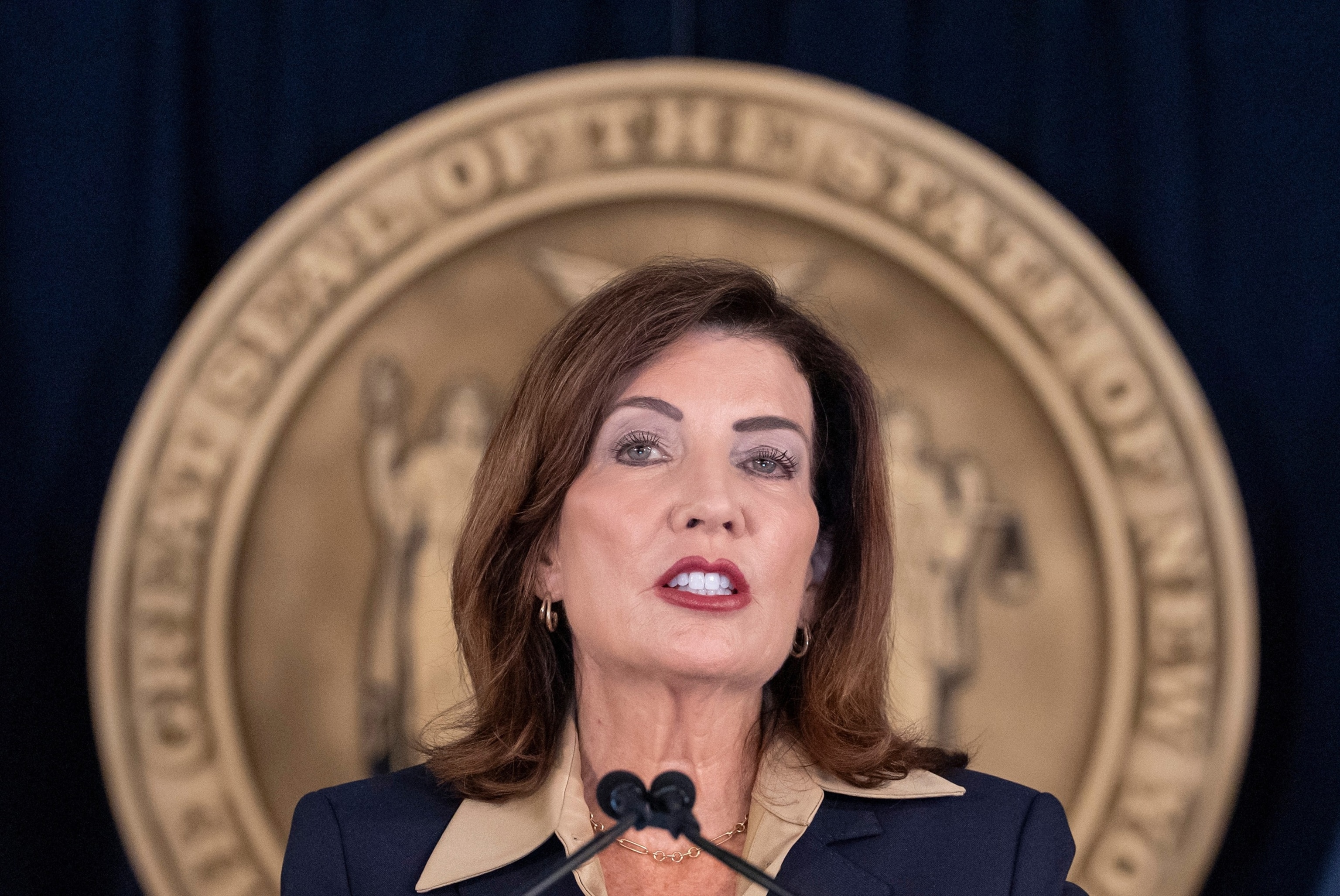
Yuki Iwamura/AP Photo - PHOTO: New York Governor Kathy Hochul speaks during a news conference, Oct. 2, 2026, in New York.
Early symptoms include cough, runny nose, fever as high as 104 Fahrenheit and red, watery eyes, according to the Centers for Disease Control and Prevention (CDC).
Two to three days after symptoms start, patients may develop Koplik spots, which are tiny white spots that may appear inside the mouth on the inner cheek.
Three to five days after symptoms start, patients may experience a rash, first appearing on the face at the hairline before moving downwards to the neck, chest, stomach, arms, legs and feet. Fever may spike even higher than 104 F when the rash appears, the CDC says.
The order, in effect until Nov. 4, allows pharmacists in New York to vaccinate children as young as age 2 with the MMR shot. It also expands who can administer MMR vaccines to include emergency medical technicians-paramedics, advanced EMS and midwives.
Additionally, it suspends a previous requirement that health care professionals who administer vaccines to those aged 19 and older receive consent before reporting vaccination to New York City or New York State immunizations registries. All MMR vaccinations of children and adults must be reported within 72 hours.
Advertisement
How hospitals, clinics in Pennsylvania are responding to the measles outbreak
"Department staff are working closely with local health departments and regional partners to track and contain the current measles outbreak," Dr. James McDonald, commissioner for the New York State Department, said in a statement. "The measles, mumps, and rubella vaccine is the best protection -- protecting nearly all people against disease who receive the recommended doses."
The state said it has administered more than 1,000 MMR shots in rural areas since July.
Meanwhile, Pennsylvania health officials are now reporting more than 1,000 measles cases. Nearly 200 people have been hospitalized and the state has reported five measles-associated deaths, which is the most any state has reported in over 30 years.
This outbreak follows a trend of growing outbreaks in the U.S. over the last two years.
Earlier this year, South Carolina reported the end to a measles outbreak of 997 cases. Last year, Texas reported an outbreak of 762 cases.
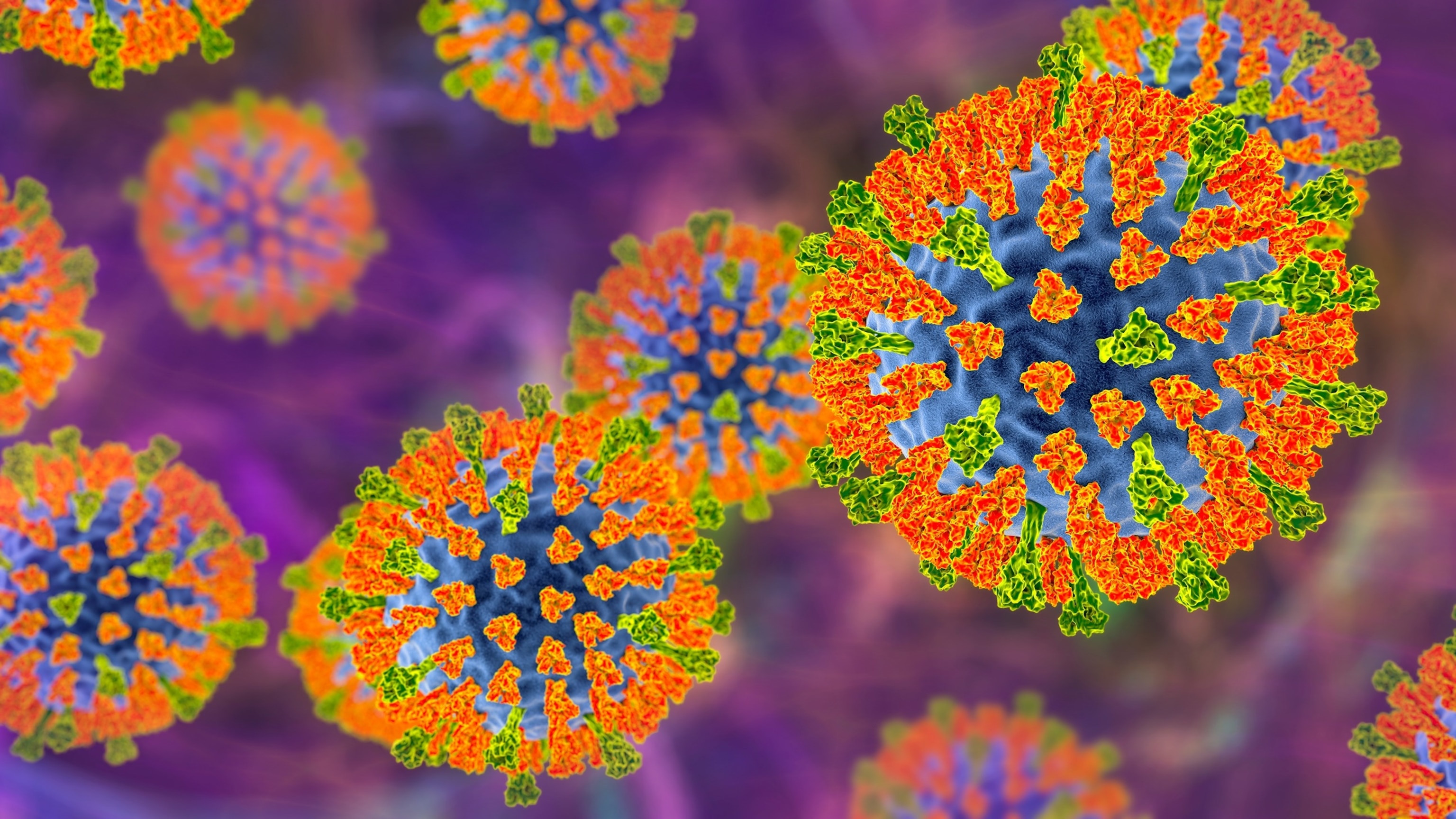
Kateryna Kon/science Photo Library/Getty Images - PHOTO: Measles virus particle, illustration.
Nationally, nearly 4,000 cases have been confirmed this year in the U.S., with infections reported in almost every state, according to the CDC. It's the highest number of illnesses from measles since 1991.
The CDC currently recommends that people receive two doses of the MMR vaccine, the first at ages 12 to 15 months and the second between 4 and 6 years old. One dose is 93% effective in preventing measles infection, and two doses are 97% effective, the CDC says.
Infants aged 6 to 11 months living in or traveling to high-risk outbreak areas may receive an early third dose of the MMR vaccine.
However, CDC data shows vaccination rates have been lagging in recent years. During the 2025-26 school year, 92.4% of kindergartners received the MMR vaccine, according to data. This is lower than the 95.2% seen in the 2019-20 school year, prior to the COVID-19 pandemic.
School vaccine exemptions also reached a record high last school year. Recent CDC data showed that vaccine exemptions for kindergarteners increased to 4.2% during the 2025-26 school year. This is up from 3.6% compared to the previous school year and 2.2% during the 2020-21 school year.
Source: “AOL Breaking”
