


New Labour’s essential frivolity is revealed through its architecture
New Labour’s essential frivolity is revealed through its architecture

Aiden AbbottThu, August 20, 2026 at 6:33 PM UTC
0
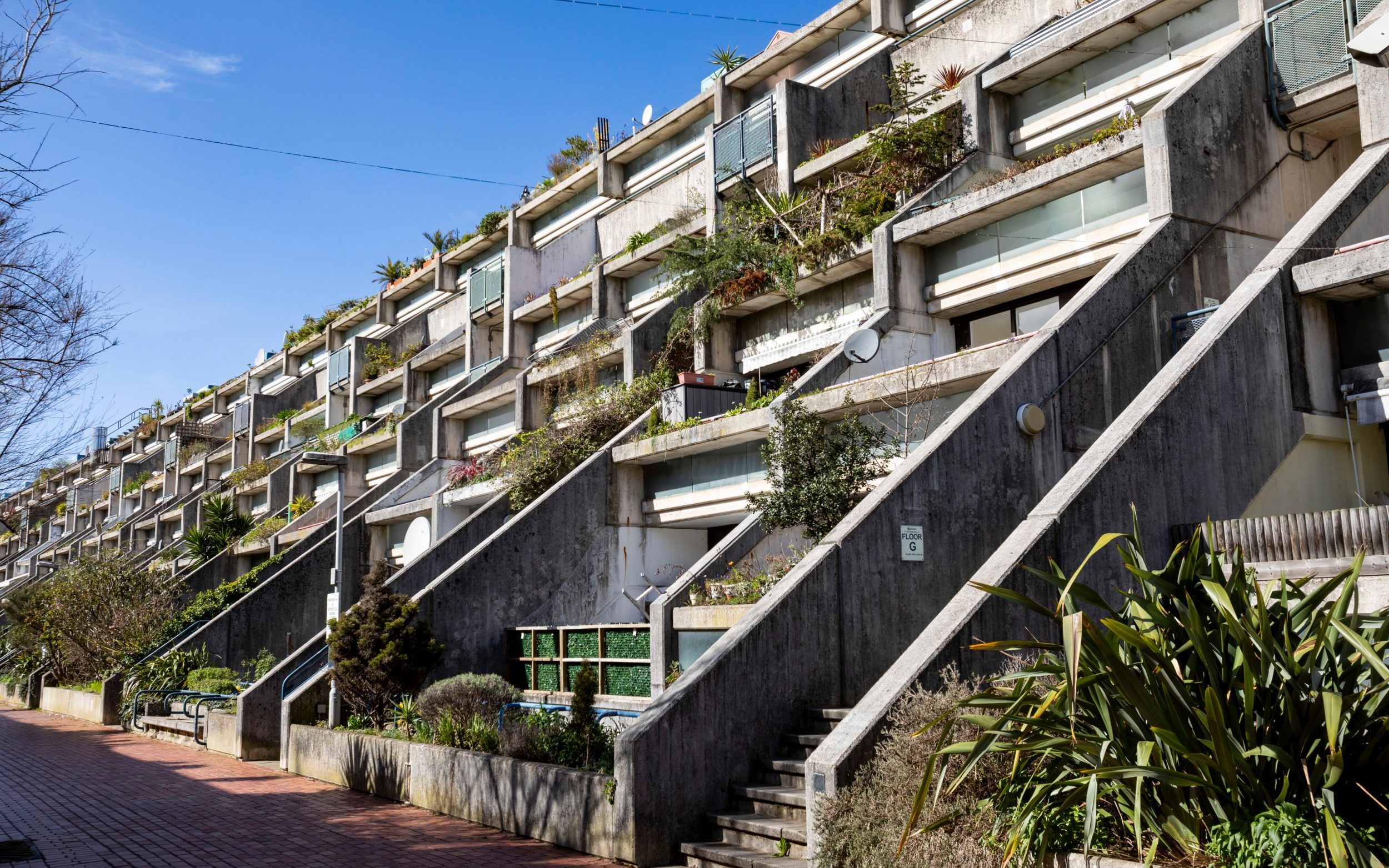
Alexandra Road Estate in Camden - Peter Carruthers
In mounting a critique of a particular period in architecture, especially one whose partisans are still stubbornly alive and kicking, let us keep two facts at the forefront of our minds.
One: I, as a writer, am smaller and poorer than most buildings. A lover of money from an early age, I still remember the discovery that houses were not only a place to keep one’s socks but also could be bought and sold. Certain roads in Primrose Hill or Portobello were suddenly transformed; in those long, low corridors of stucco was trapped billions and billions of pounds worth of holidays and pet snakes and Warhammer sets and yachts to strange countries from which one returns with a bird of Paradise mounted firmly to the shoulder.
Two: despite his advantages in size and resources, the architect is a slimy, belly-crawling creature who slips from our hands by his mermaid’s tail. Unlike the painter, the novelist or the musician, his work serves a practical end we cannot live without. This permits him the false modesty of a public servant, under the guise of which he may impose his ideals and his tastes on the public at a greater scale, with greater cunning, than his peers in the plastic arts.
The Barbican is a far more tyrannically doctrinaire, and – thanks to its size – visually unavoidable, expression of the values and ambitions of Harold Wilson’s Britain than A Bigger Splash, yet the names Chamberlin, Powell and Bon are far less well known than that of David Hockney. The architect’s guiding hand eludes us because its work is necessary and often mundane; unlike Hockney, he deals in toilets and elevator shafts. What is not necessary is the lattice of overlapping bike wheels that pockmark the façade of the Library of Birmingham, the point from which we will sally forth in our appraisal of the architecture of the New Labour era.
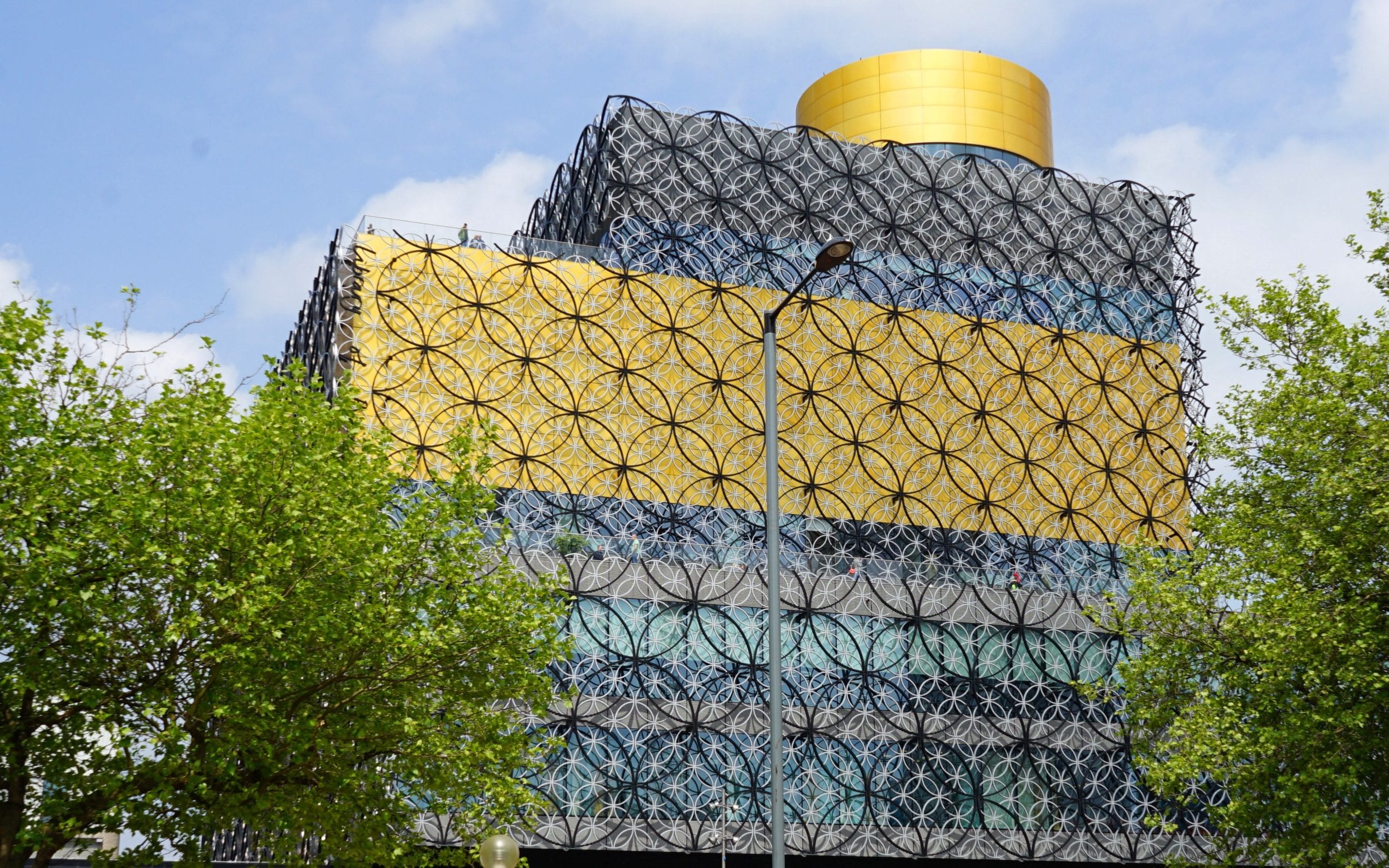
The Library of Birmingham - Universal History Archive
Francine Houben’s Library of Birmingham, finished in 2013 (“New Labour architecture” will here mean buildings designed 1997-2010, even if only completed in the Cameron era), is a particularly instructive case study for the fact that it was built to replace the since-demolished Birmingham Central Library – a handsome example of 1970s brutalist purism – and sits on the adjacent lot.
What is distinct in the later style is brought into relief by the immediate comparison with the former. The distinct feature of Birmingham Central Library was its inverted ziggurat top: three slabs of raw concrete, the overhanging mass borne on a grid of conspicuously slender columns, based on the pilotis of Corbusier’s Villa Savoye. The effect is one of brooding, megalithic seriousness – the manly beauty of, to borrow a slightly Starmeresque phrase from Henry James, describing the Roman aqueducts that criss-cross the landscape of Provence, “objects built not to please, but to serve”.
Houben’s 2013 building is a mirror image of its predecessor – quite literally so, the ziggurat top here inverted into a stepped pyramid. But the heavy sobriety has been lost; the flat planes which lend the earlier library its monumental grandeur have been interrupted by a net of aluminium curves, draped over the building like a doily. The raw concrete has been replaced by glass and steel, and for one portion of the upper section, a cheap filigree gold. The pilotis, the older library’s explicit link with the tradition of Corbusier, have been scrapped, and the three portions of the upper section are set playfully off kilter. Symmetry, monochromy, clarity of form, the purity of the straight line and the solid mass – all this is treated as suspect, with a preference for the quirky and the curvaceous, and a smirking irreverence toward the angular self-seriousness of the High Modernists.
Advertisement
For perhaps the most bombastic example of the New Labour style, we may look no further than Will Alsop’s “Chips Manchester”, completed in 2009. The plan is based, as its name reminds us, on a stack of three rough-cut chips, precariously balanced on the edge of Manchester’s Ashton Canal and clad in alternating shades of canary yellow and Ferrari red. Like many buildings from the period, its bright colours and wonky proportions draw much from SuperDutch, a book published in 2000, compiling the work of the post-modernist studios active in the Netherlands.
One contemporaneous review by The Guardian is chock-a-block with phrases like “audacious”, “ludic”, “tipsy bravura” and “mischievous creativity”. The headline reads: “Chips ... the hottest place in town”. A decade later, it would be revealed that, unbeknownst to the residents, the underside of the cladding (the outside is plastered, in a three-storey font, with names of Manchester’s canals) had been marked with the words: NON FIRE-RETARDANT. Shockingly, Chips Manchester was not, as I naturally assumed, built under (and perhaps even at the personal behest of) Andy Burnham.
But the New Labour mode of architecture appears its most dressed-down, its most “itself”, when applied to governmental offices: Foster and Partners’ London City Hall and EMBT’s Scottish Parliament Building. The former is a semi-flaccid Gherkin-in-miniature which has been blown off-course by a strong wind, and the latter is a bundle of unresolved curves and bounces shaped like a string of keepy-uppies. Nothing about either would suggest we are looking at the architecture of state power. These are buildings for politicians who don’t wear ties, listen to pop music, take part in fun-runs, and might be spotted somewhere in the background of Peter Kay’s “(Is This the Way to) Amarillo” video for Comic Relief. These are buildings Blair might describe as “really brilliant”, Mandelson might describe as “fab”, and Campbell might describe as “sexed-up”.
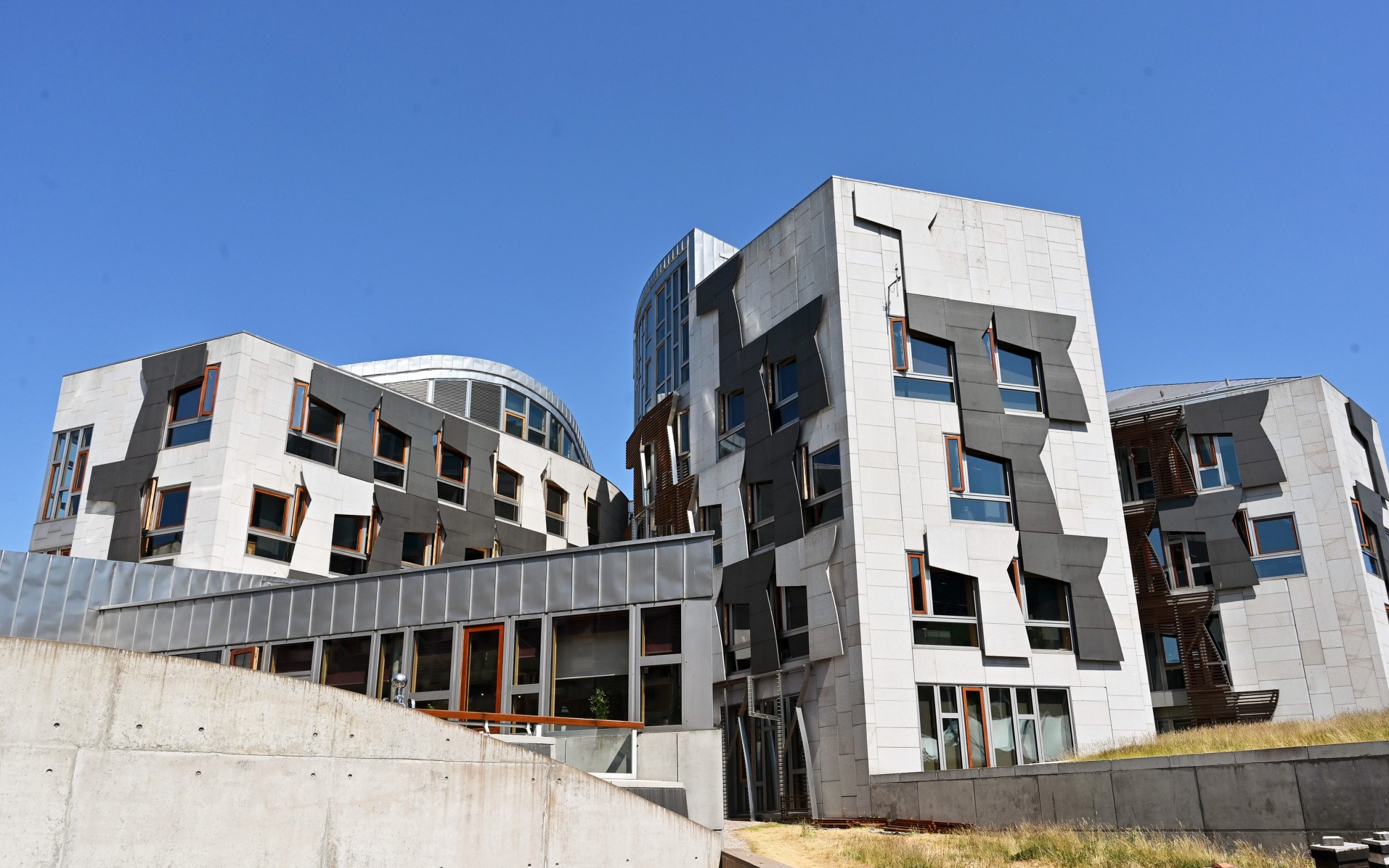
The Scottish Parliament building - Ken Jack
What was New Labour? In brief, it was a party that, in the post-war era, once envisioned itself as the authors of a new social order, now resigning itself to the notion that this had been defeated and they would have to make their peace with capital to survive in the new millennium. The world was no longer theirs to make. It is the redrafting of Clause IV, the replacement of Sidney Webb’s straightforward pledge to “secure for the workers by hand or by brain the full fruits of their industry” with the airy, primary-school-assembly language of Blair’s 1994 redaction, of “realising our true potential”, and “living together, freely, in a spirit … of respect”. It is a retreat from socialism’s concrete, material demands into a more whimsical, less ambitious register, concerned instead with fundraising for Comic Relief and lofty abstractions around human rights. It is also, crucially, about politicians doing keepy-uppies, listening to Oasis, and not wearing a tie.
And so it was in architecture. The utopianism of the old High Modernists, the vision of urban planning as the tool by which Europe would be put back in order in the wake of catastrophe: of wide concrete boulevards and towering obelisks casting long, angular shadows into the street. All this was out of date and had to be shelved. The glass-and-steel constructions that had previously been the purview of Canary Wharf and Manhattan, the vernacular of high finance, would be applied to the library, the comprehensive school, and the municipal office with childish frivolity. Sinuous, rippling facades, flashy colours, jaunty angles.
In 2017, I watched Neave Brown give a lecture at the Hackney Empire on the Alexandra Road Estate in Swiss Cottage. Finished in 1979, it is the foremost example of the mode of low-rise high-density modernist housing pioneered by the Camden Architect’s Office under Sydney Cook (inspired by the fifth volume of Corbusier’s Oeuvres Complète, published 1953, which contains plans for two unfinished projects of a similar type.) Neave Brown was among the generation charged with undertaking the slum clearances and rebuilding London in the wake of the Blitz. The lecture was a dry, detail-heavy affair concerning the precise measurements of cornices and balustrades, and the restless nights spent doing it and crossing it out and doing it and doing it again.
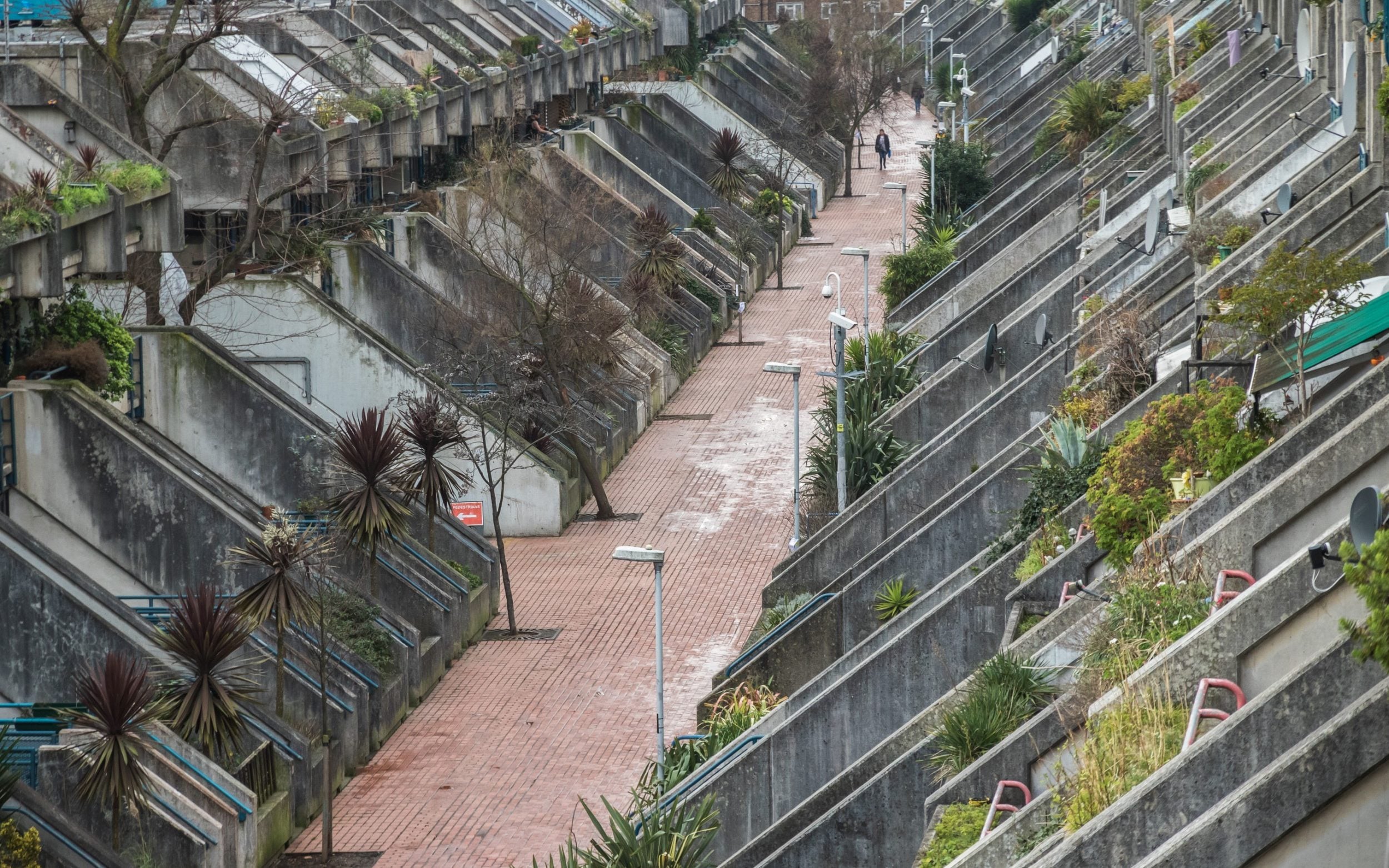
Alexandra Road Estate in London - Victor Huang
“These are the kinds of issues that are very difficult, and it can be a nightmare going to bed and getting up again – when you have finished, and you got it right, nobody notices, at all, simply because it has become normal.” He was a serious man, set a serious task, and he put on a tie. Alexandra Road (which is not normal, it is beautiful, it is meticulously beautiful) would be Brown’s last project in Britain. Built under conditions of torrential rain and running far over budget, it was long taken as a repudiation of the low-rise-high-density model Brown had spent his life on, and cut his career short.
After Grenfell, that verdict was reconsidered. The lecture came in the wake of an entirely unexpected award from the Royal Institute of British Architects in 2017: “I’m dumbfounded … I thought my buildings were a curiosity of the past that people had largely forgotten about.” He passed away from lung cancer the following year. All night at the Hackney Empire, the pointer rattled violently in his hand. The next night, Jimmy Carr was on.
Source: “AOL Money”
