


Healey plans Budget raid on family businesses
Healey plans Budget raid on family businesses

Nick GutteridgeSun, October 18, 2026 at 8:00 PM UTC
0
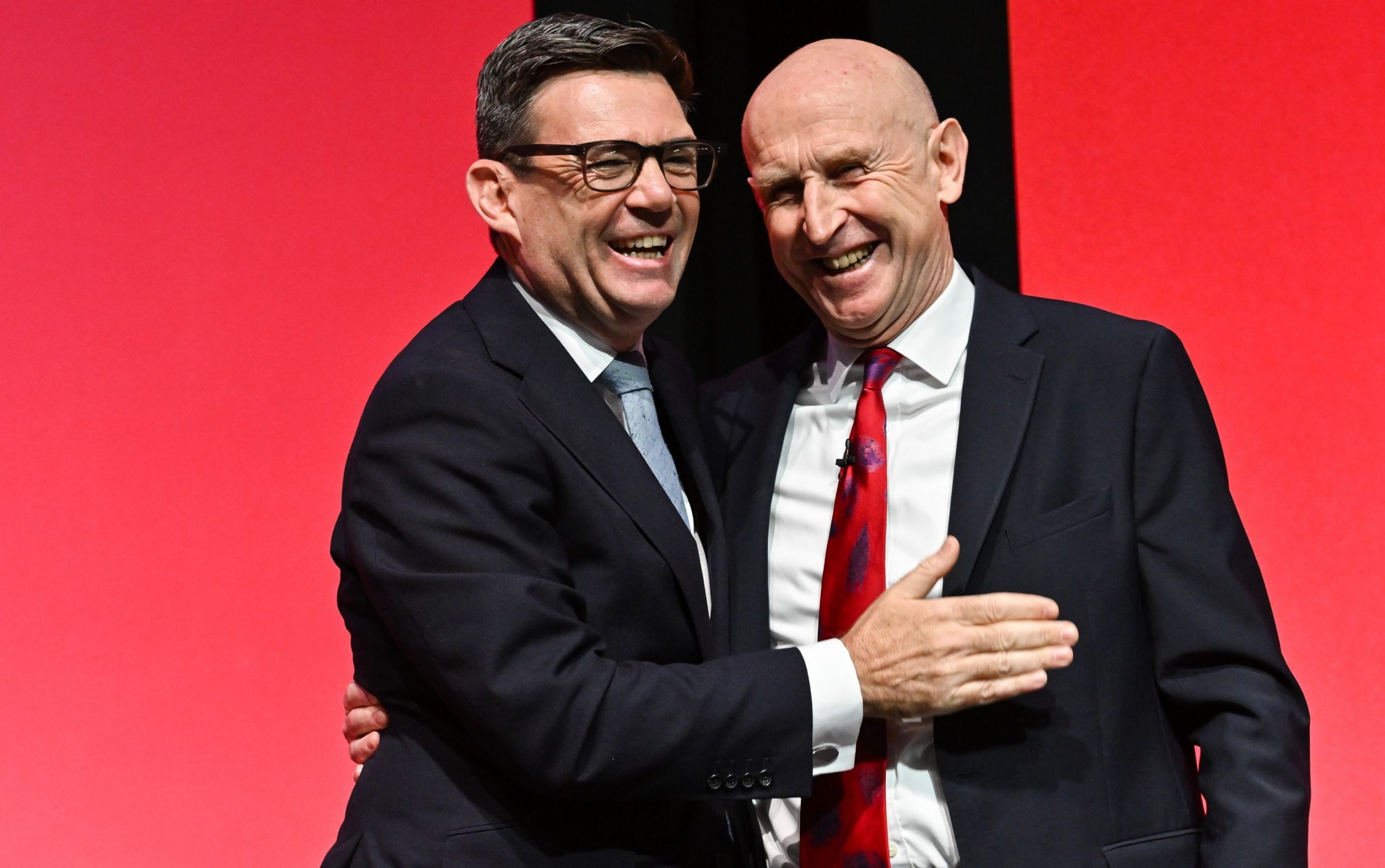
Andy Burnham with John Healey, who will deliver his first Budget on Oct 28 - Future Publishing via Getty Images/Wiktor Szymanowicz
John Healey has drawn up plans for a tax raid on family businesses ahead of the Budget.
The Chancellor is considering proposals to levy income tax when business owners hand their company down to the next generation, potentially almost doubling the bill.
At present, transfers can be structured so they attract capital gains tax, which is charged at a lower rate.
The plans would hit entrepreneurs who wanted to retire, and would seek to raise hundreds of millions on top of Labour’s previous raids on family businesses through inheritance tax, which are expected to generate £300m a year.
On Sunday night, accountants warned that Mr Healey’s plans threatened to push many family businesses “to extinction” and would discourage entrepreneurs by making it more costly to pass on what they had built.
The Conservatives accused the Government of punishing risk-taking.
Chancellor’s plans explained
Mr Healey is considering whether to shut off a means of handing down a business that owners frequently use when they stop working.
Rather than sell the family firm to the next generation and trigger a large one-off tax bill, parents often convert their holdings into “redeemable shares” which the business can buy back using its profits.
This attracts capital gains tax, charged at 24 per cent for higher-rate payers, compared with 45 per cent for income tax.
Changing the rules could mean a business owner paying tax of up to £450,000 on a £1m business if they handed it down to the next generation using redeemable shares, up from £240,000 under the current regime.
Meanwhile, selling the business on the open market would still be taxed as a capital gain.
Labour has already made it more expensive to hand down family businesses after death by cutting inheritance tax relief.
Rachel Reeves, Mr Healey’s predecessor, faced strong criticism after her first Budget for targeting farmers who left land to their children. Together, the changes are expected to raise £300m a year.
Farmers initially faced paying inheritance tax on assets worth more than £1m. The Government has watered this down following sustained protests, with the threshold now set at £2.5m, but it still faces calls to scrap the tax entirely.
Business owners have also been hit with a raft of red tape under the workers’ rights changes introduced by Angela Rayner, as well as minimum wage increases that many say they cannot afford.
Andrew Griffith, the shadow chancellor, said: “This Labour Government seems determined to squeeze every part of the economy, punishing the people who take risks, create jobs and build businesses for future generations.
Advertisement
“Not content with its Family Business Tax, Labour is once again coming after the very firms that keep our local economies running.
“Family businesses are the backbone of Britain. They provide jobs, support local communities and are often built over decades through hard work, sacrifice and personal risk.
“These changes are set to make it easier to sell a family business than to pass it on to your own children. That cannot be right.”
KPMG, one of the big four accounting firms, said it had “significant concerns” that the plans risked “discouraging intergenerational transfers of ownership”.
A consultation on the plans was started by HMRC over the summer and closed in mid-September, six weeks before Mr Healey’s first Budget on Oct 28. The Chancellor may yet back away from making the changes in the face of business opposition.
John Endacott, a partner at chartered accountants PKF Francis Clark, said it seemed to have been “timed to facilitate an autumn Budget announcement”.
He warned: “Long-standing family companies are still adjusting to the inheritance tax changes. Further taxes on passing businesses to the next generation risk taxing them to extinction.”
Industry sources said the change was likely to be presented by the Chancellor as a stricter approach to tax avoidance rather than a tax raid.
They added that while it could in theory raise hundreds of millions or even billions of pounds for the Exchequer over several years, in reality many owners would try to avoid the tax by selling or finding other more complex ways to hand down their businesses.
It comes after the Institute for Fiscal Studies said the Chancellor might need to find “tens of billions of increase in taxes” to avoid spending cuts.
Mr Healey is going into the Budget facing a £35bn shortfall if he wants to maintain existing spending policies and boost defence funding as promised.
In recent weeks, Downing Street has tried to dampen speculation around more large tax rises amid warnings they would further damage growth.
The Chancellor is poised to launch a raid on high-street banks despite being told it would drive up mortgage rates and worsen the cost-of-living crisis.
He is also widely expected to announce a new tax on gambling machines, which would bring in £500m, and could increase rates of capital gains tax.
But he will probably attempt to find billions more through schemes to end on tax avoidance, benefits fraud, and waste in the public sector.
A Treasury spokesman said: “As has always been the case, decisions on tax are a matter for the Chancellor to set out at fiscal events, rather than routinely commenting on rumour, speculation or proposals.”
Source: “AOL Money”
