


Elon Musk Created $26 Billion a Year for SpaceX Days Before the IPO
Elon Musk Created $26 Billion a Year for SpaceX Days Before the IPO

Omor Ibne Ehsan Sun, September 27, 2026 at 9:01 PM UTC
0
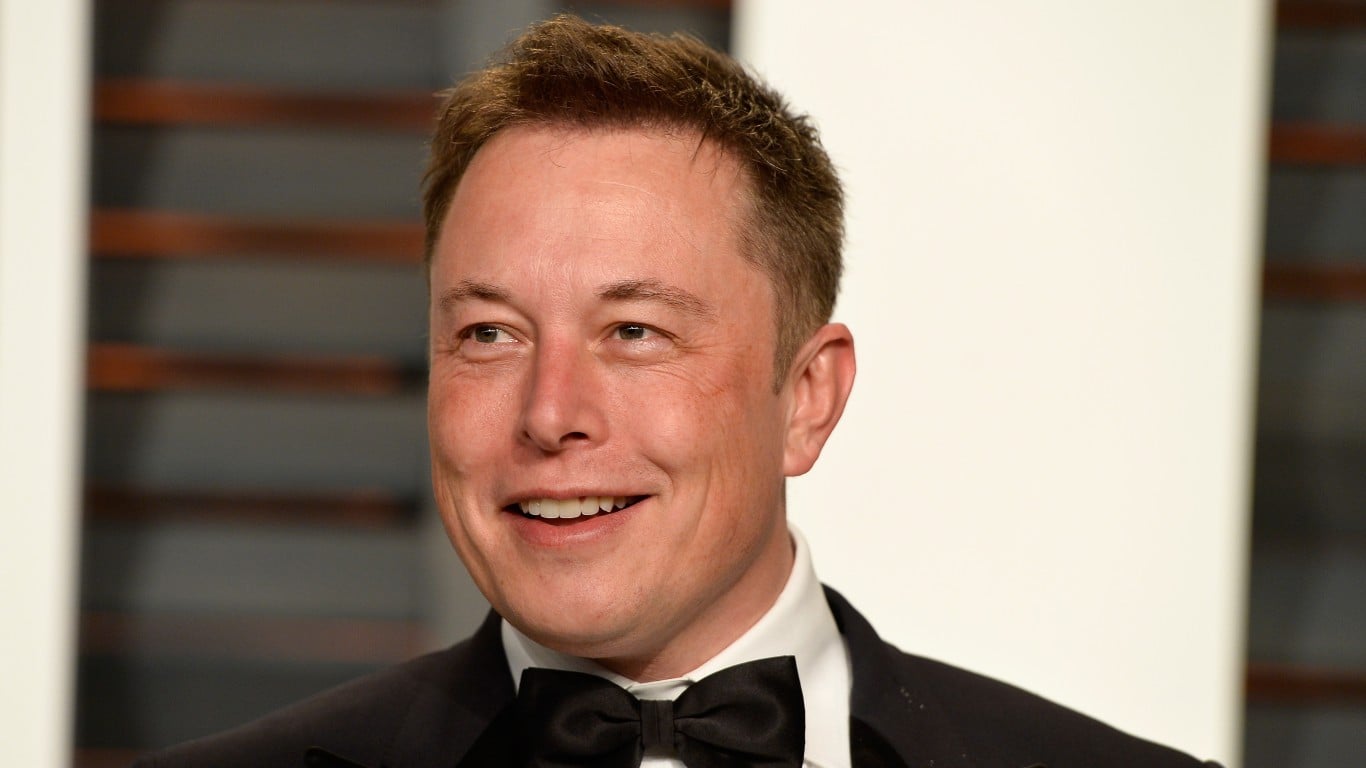
Pascal Le Segretain / Getty ImagesQuick Read -
Bulls are giddy as Elon Musk just added a massive high-margin revenue stream for SpaceX
This is a much-needed boost as market sentiment hasn't been cooperating
Here's how this could impact the company's IPO
The biggest 401k decisions tend to get made once and never revisited: when to roll it over, what to hold inside it, and when to start taking money out. That is exactly what the report: 401k & IRA Tips and Answers was created to address, and it is free today. Read more here. (Sponsor)
The market geared up for a SpaceX IPO on June 12, and the runway between the confidential filing and the first trade turned out to be anything but quiet. SpaceX filed confidentially with the SEC on April 1, then published its S-1 on May 20. In the weeks that followed, the company signed two landmark compute-rental contracts that together added roughly $26 billion in annual run-rate revenue before a single share changed hands publicly.
The speed of that buildup caught even veteran market observers off guard. Epistrophy Capital Research chief market strategist Cory Johnson noted that SpaceX became "the first company to ever add $26 billion in ARR [annual run rate] between the date of its IPO filing with the SEC and the first trade." The IPO itself landed as the largest in history: SpaceX (NASDAQ:SPCX) priced at $135 per share, raised $75 billion, and opened June 12 at $150, closing the day at $161 for a 19% first-day gain at a market cap of roughly $2.1 trillion.
That euphoric debut, however, proved short-lived. Shares surged to an intraday peak of $225.64 on June 16 before reversing sharply, touching a low of $104.83 on August 3. The company's first post-IPO earnings report, released in early August, beat revenue estimates with $7.81 billion in Q2 2026 revenue (up 92% year-over-year), yet the same filing disclosed $28.5 billion in first-half capital spending and about $25 billion in negative free cash flow, which rattled investors.
Now Available: The 401k Answers Nobody Gives You.
For many Americans, funding a 401(k) only leads to more retirement questions. Should you roll your 401k into an IRA, and when? What’s the tax impact if the rollover check gets made out to the wrong name? When do required withdrawals begin, and how much do you have to take?
Fisher Investments put the answers in one place. 401k & IRA Tips and Answers is free, and it covers rollovers, contribution limits, required withdrawals, and what actually belongs inside the account once the balance gets serious. Read More Here ›
How SpaceX's sales ballooned before the bell rang
Few observers predicted that Anthropic and Alphabet (NASDAQ:GOOG) would both sign massive compute deals with SpaceX in the weeks before the IPO. The February 2026 all-stock merger that brought xAI (along with the X social platform) under the SpaceX umbrella made it possible, transforming SpaceX from a launch-and-satellite firm into one of the world's largest AI infrastructure landlords almost overnight.
Anthropic agreed to pay $1.25 billion per month through May 2029 for full access to the Colossus 1 data center near Memphis, Tennessee, a facility housing more than 220,000 NVIDIA GPUs and drawing 300 megawatts of power. The deal was announced around May 6 and its financial terms surfaced in SpaceX's S-1 filing. Anthropic has since signaled plans to expand into Colossus 2 as well. Then, on June 5, just one week before trading began, Google signed a similar agreement to pay $920 million per month from October 2026 through June 2029 for access to roughly 110,000 NVIDIA GPUs, the compute needed to power its Gemini models.
Combined, the two contracts add about $26 billion in annual run-rate revenue, a figure that dwarfs SpaceX's $18.7 billion in full-year 2025 sales reported in the S-1. That context reshapes the valuation math: at a $1.77 trillion IPO price against roughly $20 billion in pre-deal annual sales, SpaceX would trade at about 90 times revenue. Layer in the new $26 billion of contracted compute income, and the price-to-sales ratio drops toward 38x. Factor in further deals of similar scope, and the forward multiple on full-year 2026 revenue could compress below 30x.
Advertisement
Why the euphoria is already fading
Revenue momentum is real, but SpaceX's financials carry a heavy burden. The S-1 disclosed a consolidated net loss of $4.9 billion in 2025, with an operating loss of $2.6 billion on $18.7 billion in revenue. The AI segment, inherited through the xAI merger, was the primary drag: it lost $6.355 billion in 2025 on $3.2 billion in revenue. Starlink, by contrast, generated $11.4 billion in revenue in 2025 and remains the only segment posting consistent GAAP operating profit.
The Anthropic and Google contracts do provide meaningful relief. The new revenue stream broadly offsets the AI segment's operating losses, and SpaceX may approach break-even or slim operational profitability in the second half of 2026. Still, neither contract represents a permanent fixture. Both agreements include 90-day termination clauses exercisable by either party after December 31, 2026, meaning the income could begin scaling down well before the contracts nominally expire in 2029.
The comparison to CoreWeave (NASDAQ:CRWV) is instructive here. CoreWeave built its business renting GPU compute to AI companies, went public in early 2025, and experienced a volatile first year as investors debated the durability of its customer relationships. SpaceX faces a structurally similar question at far greater scale. Consider what drives these deals in the first place: Alphabet pays Apple (NASDAQ:AAPL) roughly $20 billion annually to remain the default search engine on Apple devices, a sum paid to preserve competitive dominance rather than out of genuine preference. The Google and Anthropic compute payments carry a similar logic: both companies are bridging a capacity gap while their own data center buildouts catch up. As that buildout progresses, the urgency shrinks.
Both Anthropic and Google are paying for compute access, not for a strategic alliance. Once sufficient proprietary infrastructure is online, the case for renewing at current rates weakens considerably. Significant contract scale-down within five years is a plausible base case, not a tail risk.
Reading the IPO's early scorecard
The post-IPO arc already reflects this tension. The initial 19% first-day pop and the sprint to $225.64 reflected scarcity-driven demand: a tiny free float of roughly 5%, index-fund inclusion mandates, and widespread retail participation through brokerages including Robinhood, Fidelity, and Charles Schwab. Once those mechanical buying forces exhausted themselves, the stock retreated all the way to $104.83 within two months of listing. Wall Street has been unforgiving of companies whose near-term losses outpace their forward-revenue stories, and SpaceX's $41.3 billion accumulated deficit and $25 billion in negative first-half free cash flow gave skeptics plenty of ammunition.
The biggest structural beneficiary of the IPO remains SpaceX itself. The $75 billion raised gives the company the runway to pursue its most capital-intensive ambitions: Starship scaling, next-generation Starlink V3 satellites, and the AI compute infrastructure management is targeting at 15 to 20 gigawatts by end-2027. Those are genuinely long-duration assets. The near-term compute rental contracts are a bridge, not a foundation, and the market appears to be figuring that out in real time.
Editor's note: This article has been to reflect SpaceX's completed June 12, 2026 IPO at $135 per share, the company's $7.81 billion Q2 2026 revenue beat, post-IPO price volatility including a peak of $225.64 and a low of $104.83, and confirmed details from the S-1 filing including the 90-day termination clauses on both the Anthropic and Google compute contracts and the AI segment's $6.355 billion operating loss in 2025.
Released: 401k & IRA Tips and Answers
(sponsor) 401(k)s are powerful retirement tools. But even savvy savers can make mistakes that quietly cost you money for decades. Choosing the wrong fund, ignoring small fees nobody adds up, rollover steps done in the wrong order, the list goes on.
These sort of mistakes is exactly what 401k & IRA Tips and Answers was created to help prevent. It is a free guide from Fisher Investments on rollovers, contributions, required withdrawals and the mistakes that do the most damage to a retirement account. Learn More Here ›
Contact editorial@247wallst.com for any questions or corrections.
Source: “AOL Money”
