


Blanche defends Trump’s White House media ban: ‘It is a privilege, not a right’
Blanche defends Trump’s White House media ban: ‘It is a privilege, not a right’

Edward Helmore Sun, September 27, 2026 at 9:42 PM UTC
0
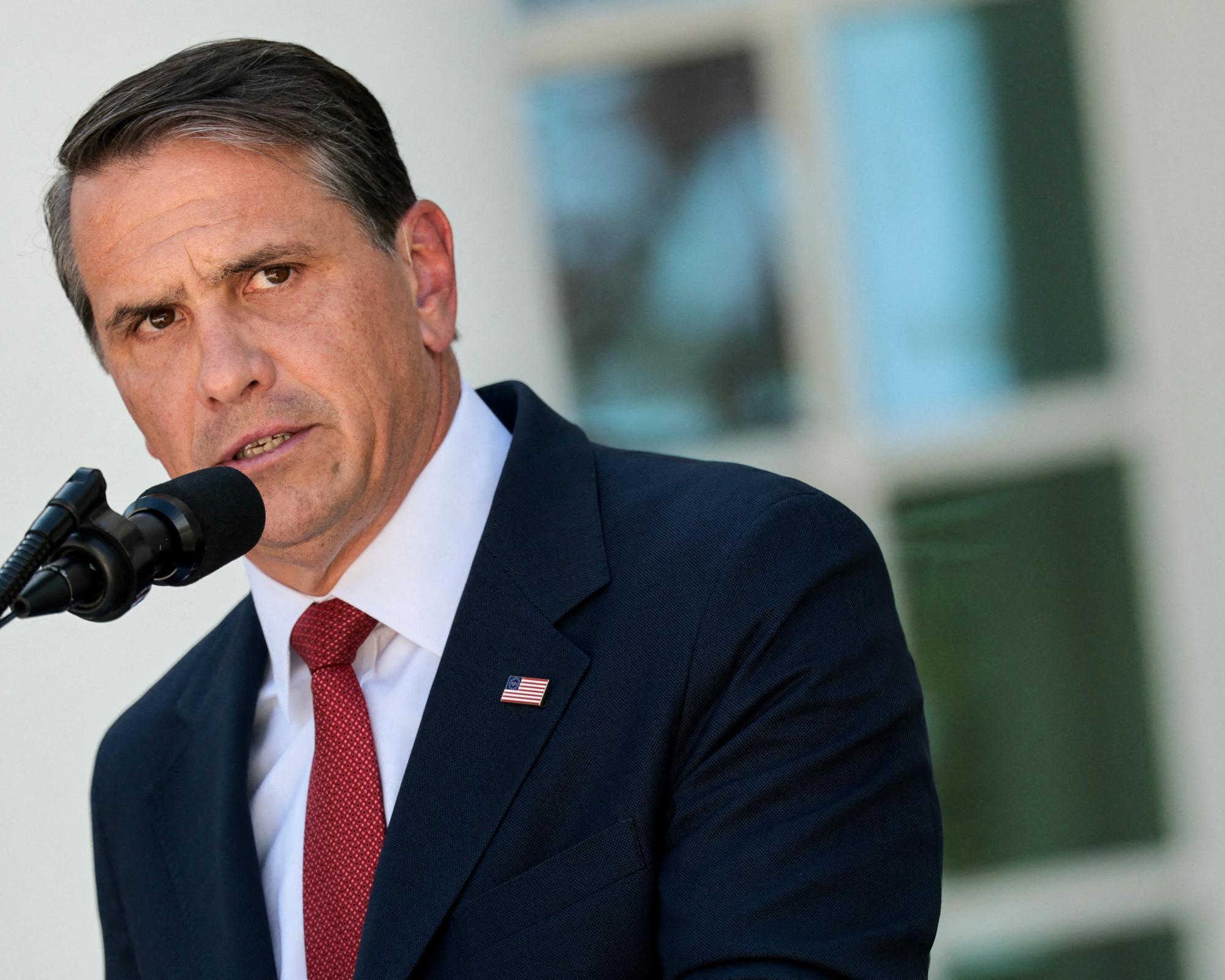
US attorney general Todd Blanche holds a press conference at the White House on 15 September 2026.Photograph: Jonathan Ernst/Reuters
Donald Trump’s attorney general Todd Blanche argued on Sunday that the administration was permitted toban three news outlets from the White House because “it is a privilege and not a right to be there”.
Appearing on the ABC News program This Week during the second week of the White House’s dispute over press credentialing and access, Blanche also said that the administration took the decision to ban CNN, MS Now and Politico beginning on 19 September because the president was “sick and tired” of what he considered to be those media outlets’ inaccurate reporting.
Blanche offered no evidence for his claim that the outlets’ reporting was inaccurate, rather than simply unflattering to the president. Pressed by the interviewer, Martha Raddatz, to point to a report the administration objected to, Blanche seemed to suggest that any negative reporting about Trump must be inaccurate.
“Wait, give you an example of when CNN doesn’t report accurately? You cannot be asking me that,” Blanche replied. “There’s not even a real dispute that the information coming out of CNN and some of these other networks is wholly and completely, almost 100 percent negative toward the president.”
On Thursday, a judge issued a temporary restraining order requiring the White House to temporarily restore the credentials of affected journalists, and they were allowed entry to the executive complex.
But on Saturday, CNN said its journalists were barred from joining the press pool traveling with the president on Air Force One.
“The president hasn’t denied access,” Blanche told ABC. “That’s not the right way to describe it.”
The continuing dispute between the administration and the White House press corps had appeared to be resolving before CNN was again blocked from providing pool TV coverage of Trump on Saturday. That was after outlets stood in solidarity with CNN, MS Now and Politico by briefly refusing to provide any pool TV feeds of the president.
On ABC, Blanche said it wasn’t unusual for a news outlet to not be allowed on to the president’s plane.
“The White House routinely decides who can go on Air Force One,” Blanche said. “This wasn’t a one-time denial of CNN. There’s all kinds of times when certain reporters are not flying or are flying.
“It’s not unusual, and as a matter of fact, it’s common every time the president travels that he and his team decide which reporters get to travel with the president.”
What Blanche did not explain is that, before Trump’s second term, the choice of which correspondents were part of the pool covering presidential travel was left to the White House Correspondents’ Association and the broadcast networks that take turns providing camera crews. After Trump returned to office last year, the White House took control of which outlets would be permitted in the Oval Office, or on Air Force One, leading to increased access for partisan, pro-Trump journalists.
Advertisement
Blanche repeated the administration’s position that the affected three outlets’ reporting amounted to a “national security problem”.
Raddatz reminded Blanche that Trump himself said ha had banned CNN, MS Now and Politico, because, he said, “they purposely write negative news, and they do that because they want to diminish the Republicans and a Republican administration”.
In the ruling to temporarily restore the three banned outlets’ White House access for 14 days, US district judge Timothy Kelly said there was nothing in the record suggesting that revocation of the press passes was motivated by national security concerns.
“Certainly, that is not what President Trump said when he announced that he was ‘banning’ plaintiffs from the White House – instead, he focused on the alleged lack of truthfulness and negativity of plaintiffs’ reporting,” Kelly wrote in his ruling.
Trump was faced with a gloomy political landscape with just over a month before the federal midterm elections in November. A recent Reuters/Ipsos poll found Trump’s overall public approval rating to be at 32%, an all-time low.
But confidence in the news media polls lower, with just 28% expressing a “great deal” or “fair amount” of trust in newspapers, television channels and radio outlets to report the news fully, accurately and fairly, according to a 2025 Gallup survey.
Bill Clinton recently commented on the battle between what the news media see as a crude effort at censorship and a denial of constitutional rights – and what the White House views as unfairly negative reporting.
“There were lots of times when I wanted to ban the White House press corps,” the former president said at the Clinton Global Initiative 2026 summit. “And there’s a reason we have a constitution – because none of us are immune from being pissed off.
“But I’m glad I never did, and I’m glad I couldn’t. And these people shouldn’t. The law should be what it is.”
Blanche was asked what the US constitution’s first amendment – which guarantees the right to a free press – meant to him.
“The law says – what the free press can do is they are free to report whatever they want,” Blanche remarked. “Of course, they can. But when it comes to the White House, it is the people’s house. It is a privilege and not a right to be there.”
He added that “it is absolutely the president’s duty to make sure that the American people are hearing accurate news.”
Source: “AOL Breaking”
